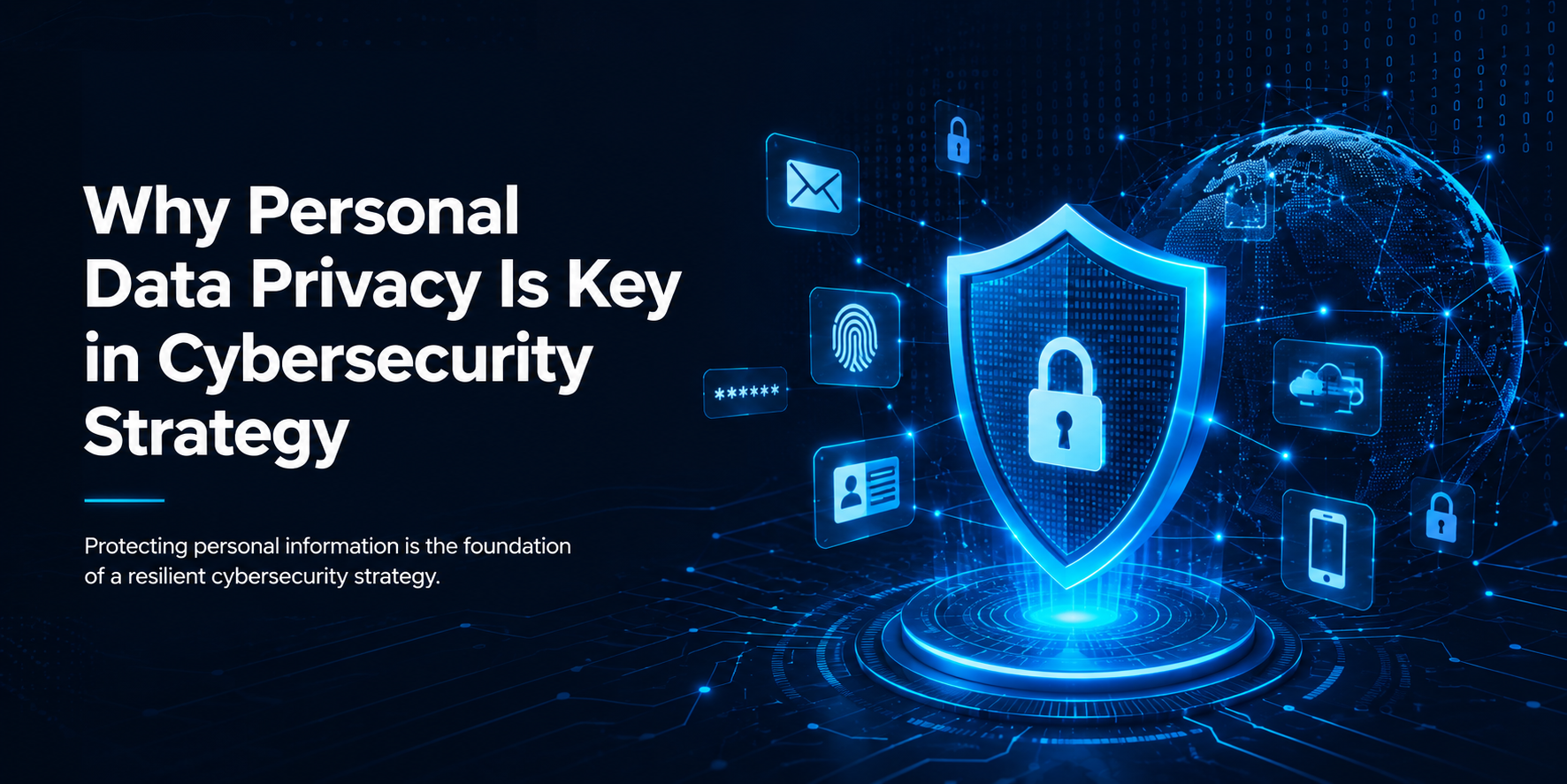
Why Personal Data Privacy Is Key in Cybersecurity Strategy
Almost everything a business does today happens online, which is why cybersecurity is no longer optional. But cybersecurity isn't only about stopping hackers; it's also about protecting the personal information of the people a business serves. This is called data privacy, and it deserves a central place in every cybersecurity strategy, not just an afterthought.
When businesses protect personal data well, they build customer trust, meet legal requirements, and reduce the damage a cyberattack can cause. This article explains why data privacy matters so much in cybersecurity, and what organisations can do to protect it.
What Is Data Privacy?
Data privacy means handling personal information responsibly, only collecting what's needed, using it for the reason it was given, and keeping it safe from people who shouldn't see it.
Personal data includes obvious details like a name or address, but also less obvious things like an email address, IP address, financial records, health information, or someone's online activity. It also covers employee records and customer or supplier details a business holds.
Why Privacy Is the Foundation of Cybersecurity
Cybersecurity and data privacy work closely together, but they aren't the same thing. Cybersecurity protects systems, networks, and data from attacks. Data privacy sets the rules for how that data should be collected, used, and shared in the first place.
A business can spend heavily on security tools, but without clear privacy rules guiding what data to collect and how to handle it, that spending is often less effective. When privacy comes first, security efforts become more focused, since the business knows exactly what it's protecting and why. Protecting data stops being just a technical task and becomes something the whole organisation values, a way of earning and keeping trust.
How Privacy and Cybersecurity Work Together
1. What Happens When Personal Data Is Breached
A data breach is when private information is accessed or stolen without permission. When this happens, criminals can use stolen personal details for identity theft, fraud, or further scams. For those affected, this can mean financial loss and significant stress. For the business, it usually means reputational damage, lost customers, legal trouble, and regulatory fines, on top of the direct cost of fixing the breach.
According to IBM's 2025 Cost of a Data Breach Report, the average global cost of a data breach was $4.44 million. However, breaches in the United States averaged over $10 million, largely due to regulatory fines and slower detection.
2. Building Privacy into Security from the Start
Rather than treating privacy as something to fix after a system is built, it works best when it's part of the design from day one. This approach is often called privacy-by-design.
Some practical ways to do this include:
- Collecting only the data that's genuinely needed (data minimisation)
- Removing or masking details that could identify someone, where possible (pseudonymisation)
- Setting clear timelines for how long data is kept before it's deleted
The less unnecessary personal data a business holds, the less there is for an attacker to steal in the first place.
3. Legal Requirements Businesses Must Meet
Governments around the world have introduced laws requiring businesses to protect personal data properly. Two of the best known are the EU's General Data Protection Regulation (GDPR) and the California Consumer Privacy Act (CCPA).
Under GDPR, businesses must report a data breach within 72 hours of discovering it, and companies that fail to comply can be fined up to 4% of their total global revenue, whichever is higher between that and a fixed amount. The CCPA gives California residents the right to see what personal data a company holds on them, and to request it be deleted or not sold.
Many other countries now have similar laws, including Ghana's Data Protection Act, 2012 (Act 843), Brazil's LGPD, and China's PIPL. This means privacy compliance isn't optional for most businesses operating today; it's a legal requirement, and increasingly a global one.
Common Threats to Personal Data
Phishing and social engineering: This is when attackers send fake emails or messages designed to trick someone into giving away passwords or personal details. It remains one of the most common ways breaches happen, because it targets people directly rather than trying to break through technical defences.
Malware and ransomware: Malware is harmful software designed to steal or damage data. Ransomware is a type of malware that locks a business out of its own systems until a payment is made. Increasingly, attackers steal personal data first and threaten to leak it publicly, even if the ransom is paid.
Insider threats and honest mistakes: Not every threat comes from outside. Sometimes an employee misuses their access on purpose, and sometimes someone simply sends a file to the wrong person or handles data carelessly because they weren't trained properly. Both can expose personal data just as seriously as an outside attack. Businesses should also understand other common cyber threats facing businesses in Ghana to better prepare their teams and systems.
How to Build Privacy into Cybersecurity
Encrypt and Secure Storage
Encryption turns data into a coded format that can't be read without the right key. Personal data should be encrypted both while it's being sent (for example, over the internet) and while it's stored, whether on a company server or in the cloud. This way, even if someone gains unauthorised access, the information stays unreadable to them.
Control Who Can Access What
Employees should only have access to the personal data they genuinely need for their job, known as the least privilege principle. Businesses should also use multi-factor authentication (MFA), a login method requiring more than just a password, such as a code sent to your phone, and review access permissions regularly to make sure they still match what each person actually needs.
Monitor and Audit Regularly
Ongoing monitoring helps catch problems early. Regular privacy and security audits can reveal weak spots before they're exploited, while monitoring tools can flag unusual activity, like someone downloading large amounts of data or logging in from an unexpected location.
For example, organisations should watch for risks such as man-in-the-middle attacks, where attackers may intercept communications and capture sensitive information in transit.
Employee Training Matters Just as Much as Technology
Most privacy failures come down to human error, not weak technology. Ongoing training helps staff recognise phishing attempts, manage passwords properly, and know exactly what to do if something goes wrong. Privacy awareness works best when it starts during onboarding and continues through regular refreshers, not as a one-time session.
Simple, clear procedures for sharing, storing, and disposing of data also go a long way, and staff should feel comfortable raising privacy concerns without fear of blame. For people looking to develop the skills needed to support these efforts, our complete guide to a cybersecurity career provides a useful starting point.
Tools That Help Protect Personal Data
Data Loss Prevention (DLP) software: This monitors data movement and blocks attempts to send sensitive information somewhere it shouldn't go, such as an outside email address, an unauthorised cloud service, or a USB drive.
Secure cloud storage and backups: Reputable cloud providers often offer stronger security than most businesses can build on their own, including strong encryption and reliable backups that help a business recover quickly after an attack.
Privacy management platforms: These tools help businesses track what personal data they hold, respond to requests from individuals asking to see or delete their data, and keep the documentation regulators expect to see.
Smaller organisations should also consider tools that help with IP fraud detection and small business protection, especially where suspicious online activity could indicate fraud or unauthorised access.
Best Practices Worth Adopting
- Collect and keep only the personal data you truly need, and delete it once it's no longer necessary.
- Carry out a privacy impact assessment before launching new products, tools, or processes, to catch privacy risks early.
- Review and update privacy policies regularly, since threats and laws both keep changing.
For a broader approach, review these cybersecurity best practices for businesses alongside your organisation's privacy policies.
Lessons From Real Breaches
One of the largest breaches in recent history exposed the personal data of around 150 million people, caused by a known software vulnerability that simply hadn't been patched in time. It's a reminder that even basic security upkeep, like applying updates promptly, is part of protecting personal data.
In another case, a healthcare employee accessed and sold patient records without authorisation. This shows why access controls and activity monitoring matter even for staff who are technically allowed into a system, since insider misuse can be just as damaging as an outside attack.
Bringing It All Together
Personal data privacy isn't a side issue in cybersecurity; it's central to it. Businesses that put privacy first tend to spend their security budgets more wisely, build stronger trust with customers and partners, and stay ahead of legal requirements instead of scrambling to catch up.
A good starting point looks like this:
- Map out what personal data you hold and where it's stored
- Put technical protections in place, like encryption, access controls, and DLP tools
- Train employees regularly, not just once
- Collect only what you need, and build privacy into new projects from the start
- Treat privacy as an ongoing effort, not a one-time project
When personal data protection becomes a core priority, not just a compliance checkbox, it lays the groundwork for lasting trust and long-term business resilience. If your organisation needs help strengthening its approach, contact us to discuss your cybersecurity needs.
Frequently Asked Questions
What is personal data privacy?
It means protecting people's personal information from unauthorised access, misuse, or theft.
Why does data privacy matter in cybersecurity?
Protecting personal data lowers the risk of breaches, which can lead to financial loss, legal fines, and lasting damage to a company's reputation.
What are the most common threats to personal data?
Phishing, malware, ransomware, insider misuse, and simple human error are the most common causes of privacy breaches.
How can a business build privacy into its cybersecurity strategy?
By using encryption, controlling who can access what, training staff regularly, monitoring systems continuously, and collecting only the data that's truly necessary.
What laws protect personal data?
Depending on where a business operates, laws like the GDPR, CCPA, and other regional privacy regulations, such as Ghana's Data Protection Act, may apply.
Does employee training really make a difference?
Yes. Since most privacy incidents come from human error, well-trained staff are one of the most effective defences a business has.
What tools help protect personal data?
Data loss prevention software, encrypted cloud storage, and privacy management platforms are among the most widely used.